
The Classroom Without Walls
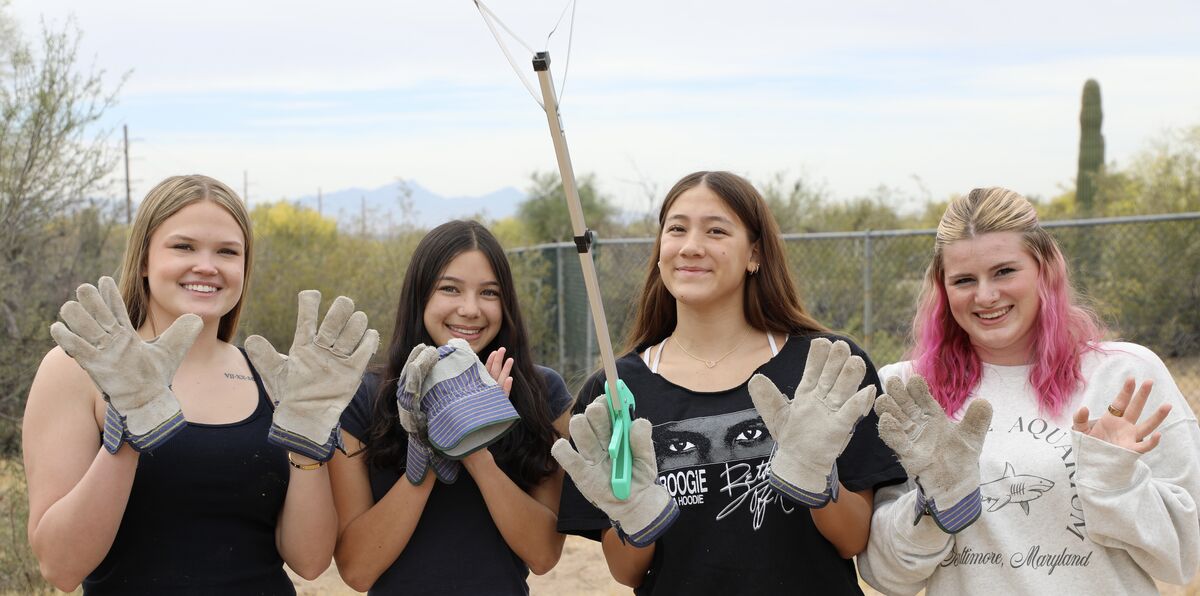 Field science students enjoy hands-on learning.
On any given day in Kristin Vanderford's field science classes at Catalina Foothills High School, you might find students with loppers and work gloves instead of textbooks and pencils. That's by design. Mrs. Vanderford's juniors are responsible for maintaining the network of nature trails that wind through the desert landscape surrounding the CFHS campus, an outdoor classroom just steps from the school building. Armed with loppers, pruners, and heavy-duty gloves, students clear dead brush, trim overgrown vegetation, and keep the trails accessible for the school community, all while learning about the Sonoran Desert ecosystem they're working in.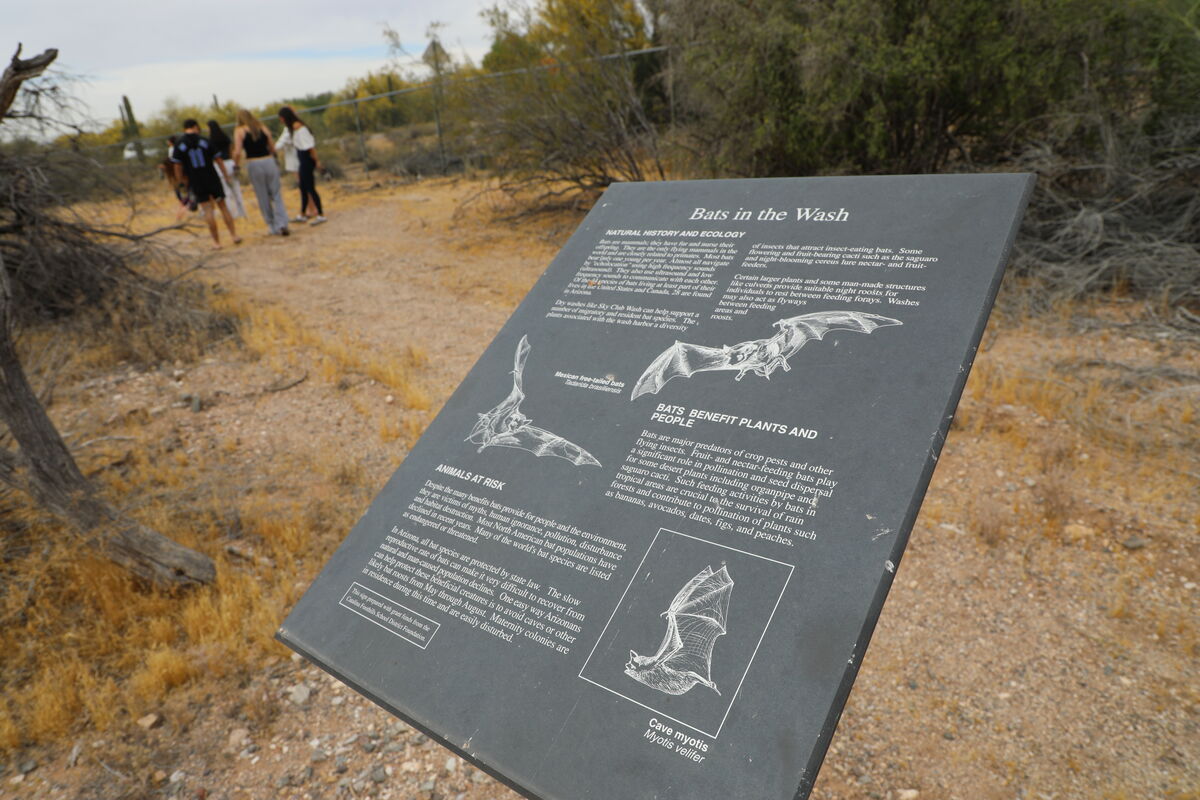
Earlier field science classes had informative signs installed along the trails.
The trails feature interpretive signs on topics like the bat species that inhabit nearby washes, giving students context for the habitat they're maintaining. On a recent outing, students spotted a tarantula hawk wasp feeding on a blooming acacia along the trail, a reminder that the desert around CFHS is very much alive.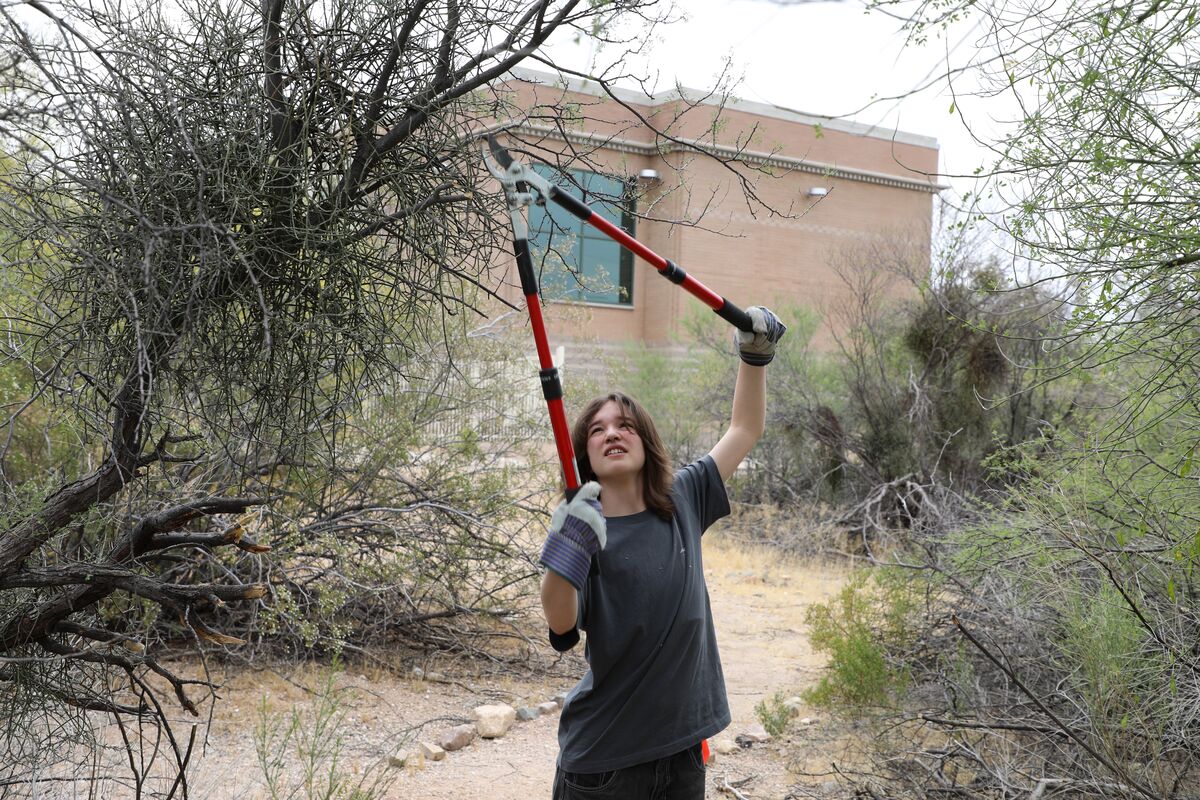 A student trims dead branches behind House 4.
Field science is an elective that applies earth and environmental science to the specific landscape students see every day. Instead of studying ecosystems in the abstract, students learn about aquifers and the southern Arizona water crisis, prescribed burns and wildfire management, and the geology beneath their feet, including seismic waves and earthquake science.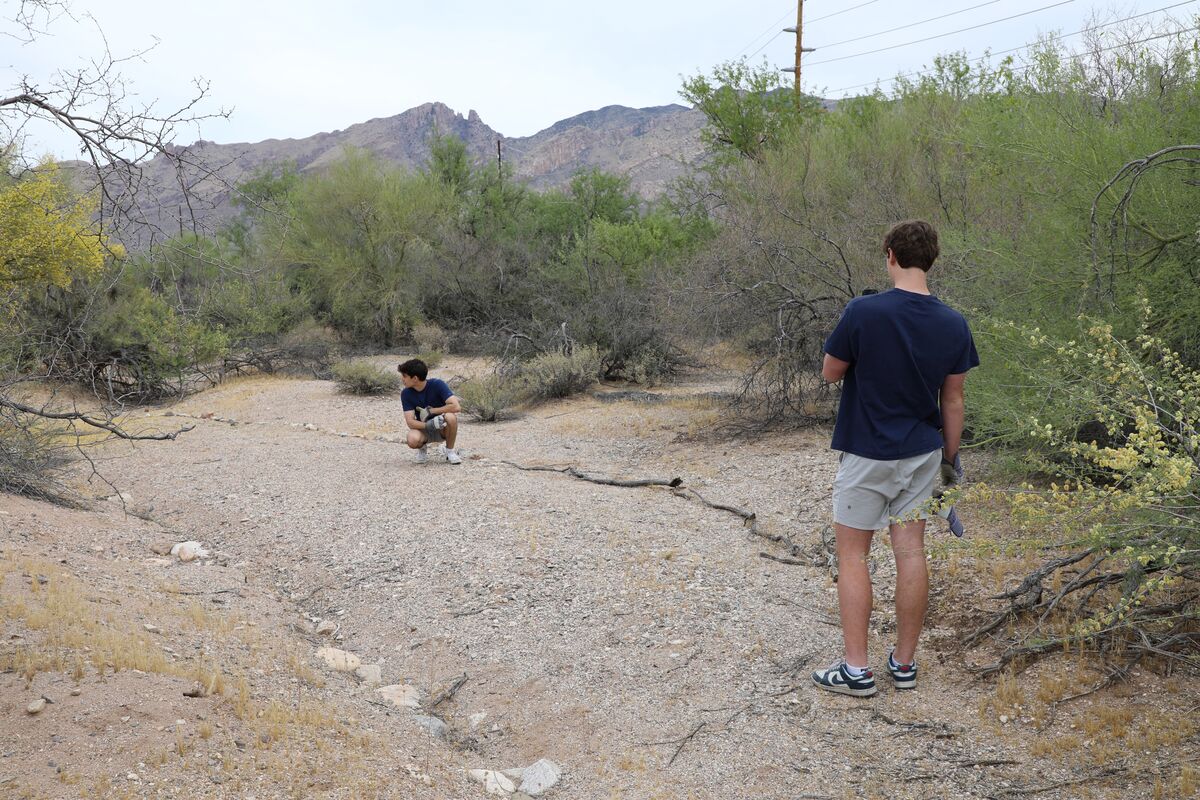 Students document their work with before-and-after photos. Each team was allowed to bring one phone for this purpose.
The students themselves are the best advocates for the class. "I like field science because we get to actually learn about the world," one junior said. "When we're learning it, it's how it's applied to the real world. Specifically, the Sonoran Desert. Exactly the environment we live in."
"It's pretty great being outside in this environment instead of sitting, learning about it in a textbook," another added. "I love the hands-on learning."
Students said the class has changed how they think about their surroundings. After studying groundwater and aquifers, the conversation turned to the water crisis in southern Arizona. Asked whether that knowledge affects their behavior, one student admitted, "Yes, we take shorter showers." 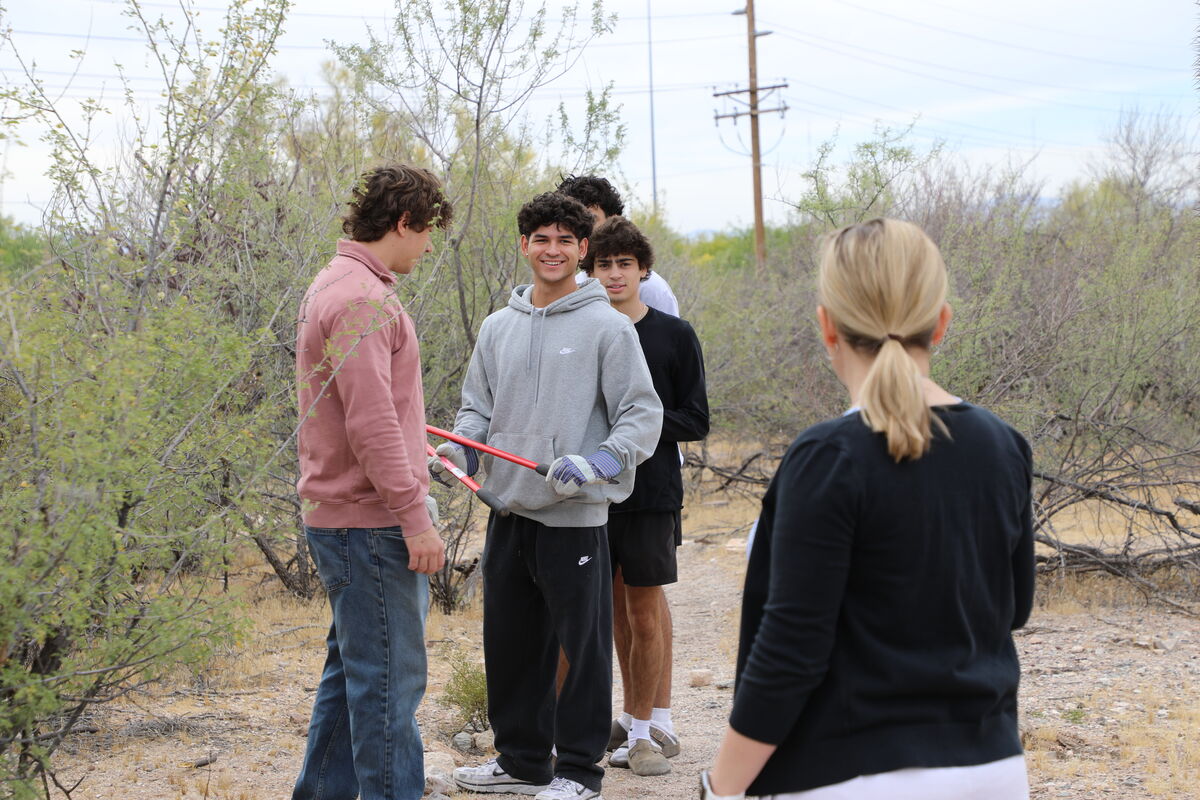 Juniors check in with Mrs. Vanderford as she surveys their work.
As for Mrs. Vanderford, the students didn't hesitate. Before the question was even finished, one junior jumped in: "Mrs. Vanderford's the best teacher ever." The others nodded. When pressed for specifics, the student thought for a moment. "She's fun. She's good at teaching. She's nice." Then, almost as an afterthought: "And she actually makes you care about stuff you didn't know you cared about."
Mrs. Vanderford, who also co-coaches the CFHS Science Olympiad team that placed third in the state this month, has built a class where learning about the natural world means getting your hands dirty. On the trails behind CFHS, her students are doing exactly that.